
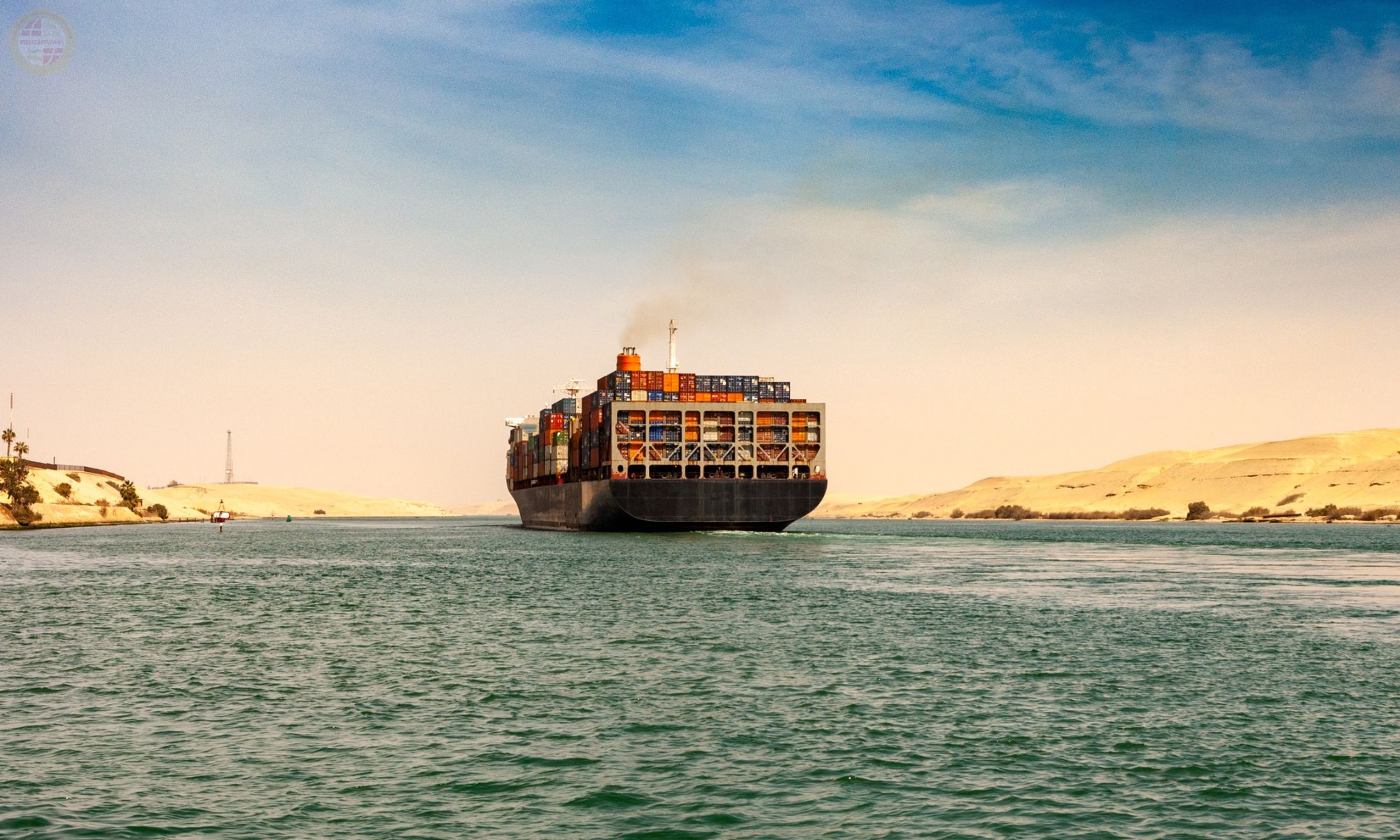
The Suez Canal Authority (SCA) has announced two major developments that will reshape global shipping routes:
Gemini Alliance-Maersk & Hapag Lloyd monitoring with potential trial transits in December 2025
Maersk Group has signed a strategic partnership agreement to resume transits through the Suez Canal starting December 2025. Under this agreement, Maersk-affiliated vessels will return to the canal in December as a precursor to a full return in the near future.
Maersk and Hapag-Lloyd have today jointly issued the statement below to respective customers.
"At the launch of the Gemini Cooperation in February 2025, A.P. Moller - Maersk and Hapag-Lloyd introduced a Cape of Good Hope network due to the on-going disruptions in the Red Sea. Gemini’s ambition has always been to return to a Suez-based East-West network once security conditions in the region permit. However, as the safety of crew, vessels and cargo remains our top priority, we currently have no specific timing to change the Gemini East-West network to sailing through the Red Sea. Considering the Gaza ceasefire progress, we closely monitor developments in the region, and we are continuously conducting detailed security assessments. When security conditions warrant it, and in keeping with the Gemini trademark of industry-leading schedule reliability, Hapag-Lloyd and A.P. Moller - Maersk will carefully coordinate with our respective customers and important stakeholders to ensure an orderly transfer to a Suez-based network with minimal disruption to our customer´s supply chains." said the statement
CMA CGM will restore full-capacity operations via the canal from December 2025
The CMA CGM Benjamin Franklin successfully transited the canal, followed by the CMA CGM Zheng He, indicating that the shipping line is regaining confidence in the route's security. The Benjamin Franklin transit was the largest vessel to pass through the canal in two years.
The resumption of normal Suez transit is expected to take time to stabilize because while some shipping lines are preparing to return, a full return depends on sustained security, detailed scheduling adjustments, and convincing carriers who have been rerouting their vessels. Factors like the recent ceasefire and reduced security risks are encouraging a gradual return, but some firms have not yet set dates, and industry analysis suggests a complete normalization could take months, not weeks.
These decisions mark a significant step toward restoring stability and efficiency in global trade flows. Freightways Global Solutions remains committed to supporting our customers with real-time updates and operational excellence across all major maritime corridors. These developments will reduce transit time between Europe and East Africa by half.
Key Takeaways
Although full normalization will take time as shipping lines adjust schedules and assess long-term safety, these developments mark a strong step toward restoring faster, more efficient global trade flows. Freightways will continue providing real-time updates as these changes are expected to cut transit times between Europe and East Africa by nearly half.
At Freightways Global, we stand ready — tracking real-time developments, calibrating our routing strategies, and positioning our clients to capture opportunity while controlling for risk. The global shipping environment is shifting; and we are closely monitoring the situation to make sure that you are always ahead of the curve.
Stay informed and ready with us, contact us for your logistiscs updates and strategies.